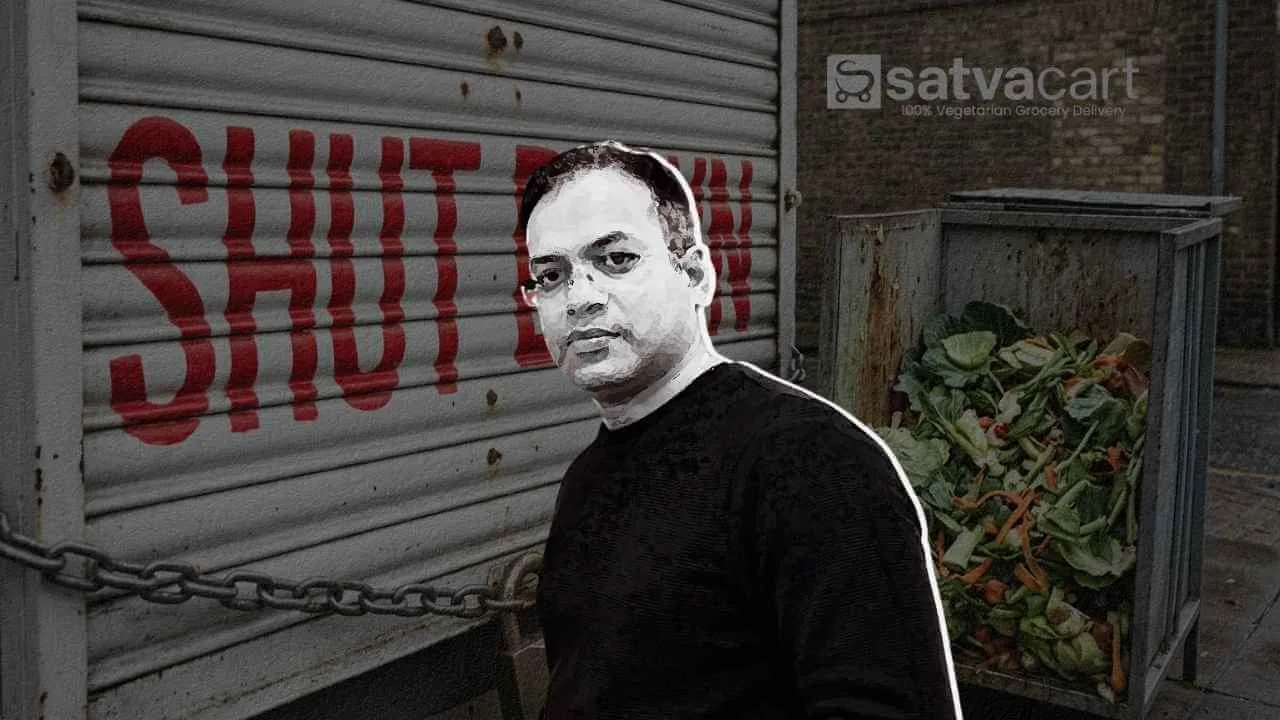
Gurugram-based online grocery startup Satvacart shuts down after around 12 years of operations, bringing an end to a long journey in one of India’s fast-changing consumer internet sectors. Founder Rahul H. Saxena says the startup completes its final day of operations on August 28 and its team is now disbanded.
The closure follows months of efforts to secure fresh capital or find a strategic buyer. Saxena says Satvacart receives funding during a difficult period, but much of it comes in smaller amounts. According to him, the capital is not enough to rebuild the business and achieve the scale needed for its next stage.
Funding Talks Fail
Saxena says the company explores several options before deciding to shut down. These include new funding, strategic investments and potential acquisitions.
“We continued pushing till the very end and explored every realistic funding, strategic investment and acquisition option available to us,” Saxena says in his closure announcement. The company also holds discussions with two larger investors for a significant investment, but neither deal eventually materialises.
Satvacart also enters acquisition discussions with multiple potential buyers. However, those talks fail to progress. Saxena says the startup’s focus on profitability does not produce enough scale to make the proposed transactions attractive to potential buyers.
Satvacart Business Model
Satvacart begins operations in 2014, initially offering milk subscriptions in Gurugram. It later moves into an inventory-led grocery delivery business model as online grocery shopping starts gaining attention among urban consumers.
Company eventually develops a micro-cluster model, operating independent warehouses that serve customers in relatively small geographical areas. This approach allows Satvacart to concentrate on local demand rather than immediately building a large city-wide network.
Satvacart raises an undisclosed seed round from Palaash Ventures and angel investors in July 2015. The startup says the funding will support expansion, customer acquisition and technology hiring. It later raises another angel round as it continues developing the business.
Unlike several online grocery startups that pursue rapid expansion, Satvacart follows a more measured approach. The company gives greater importance to profitability and unit economics instead of spending heavily to build scale.
Business Standard reports in 2019 that Satvacart reaches unit-level break-even in 2016 and records a small positive EBITDA by July 2019. Saxena later describes the company as one of the early online grocery businesses to demonstrate profitability.Grocery Market Changes Fast
The market around Satvacart changes sharply over the years. The rise of quick commerce introduces a new model in which companies promise groceries and other products within minutes.

Blinkit, Zepto and Swiggy Instamart expand their networks of dark stores and fulfilment centres to support rapid deliveries. Amazon and Flipkart also increase their presence through Amazon Now and Flipkart Minutes.
This shift makes scale, delivery speed and local inventory increasingly important competitive factors. Smaller businesses that focus on profitability can face a difficult choice between maintaining financial discipline and spending more capital to keep pace with larger competitors.
Why Startups Close
Startups can shut down for several reasons, including a shortage of capital, weak customer demand, high operating costs, intense competition and difficulty reaching a sustainable scale. Even a business that reaches profitability at the unit level may struggle if it cannot generate enough overall revenue to support expansion.
Funding conditions also play a major role. Investors may become more cautious when markets change, while strategic buyers may look for businesses with large customer bases, strong technology or significant market share. A startup with a smaller but profitable operation can still find it difficult to attract enough funding for the next stage.
For Satvacart, the challenge appears to be a combination of limited funding, insufficient scale and a rapidly changing grocery market. The company’s profitability-focused approach helped demonstrate operational discipline but did not provide the scale needed to make funding or acquisition discussions successful.
Founder Final Message
Saxena says the final months become increasingly difficult as the company continues searching for a way forward. He eventually decides to stop operations rather than continue at a cost to people who had supported the business.
Final months become increasingly difficult as the company continues searching for a way forward. We've decided to stop operations. I genuinely believe I gave Satvacart the very best effort I was capable of.— Rahul H. Saxena, Founder, Satvacart
Over the years, his responsibilities cover technology, operations, fundraising, marketing, supply chain and customer experience. As Satvacart closes, he says he has no regrets about the journey and is now looking towards his next chapter.
Satvacart closure shows how dramatically online grocery has changed since 2014. The sector now includes large platforms with extensive fulfilment networks, strong funding and delivery promises measured in minutes.
For early-stage businesses, the experience also highlights the importance of finding the right balance between profitability and scale. A business may build a viable operating model but still need significant capital and market reach to remain competitive when the wider industry moves rapidly.
Satvacart now becomes another early name from India’s online grocery sector to exit as the market enters a more consolidated and highly competitive phase.