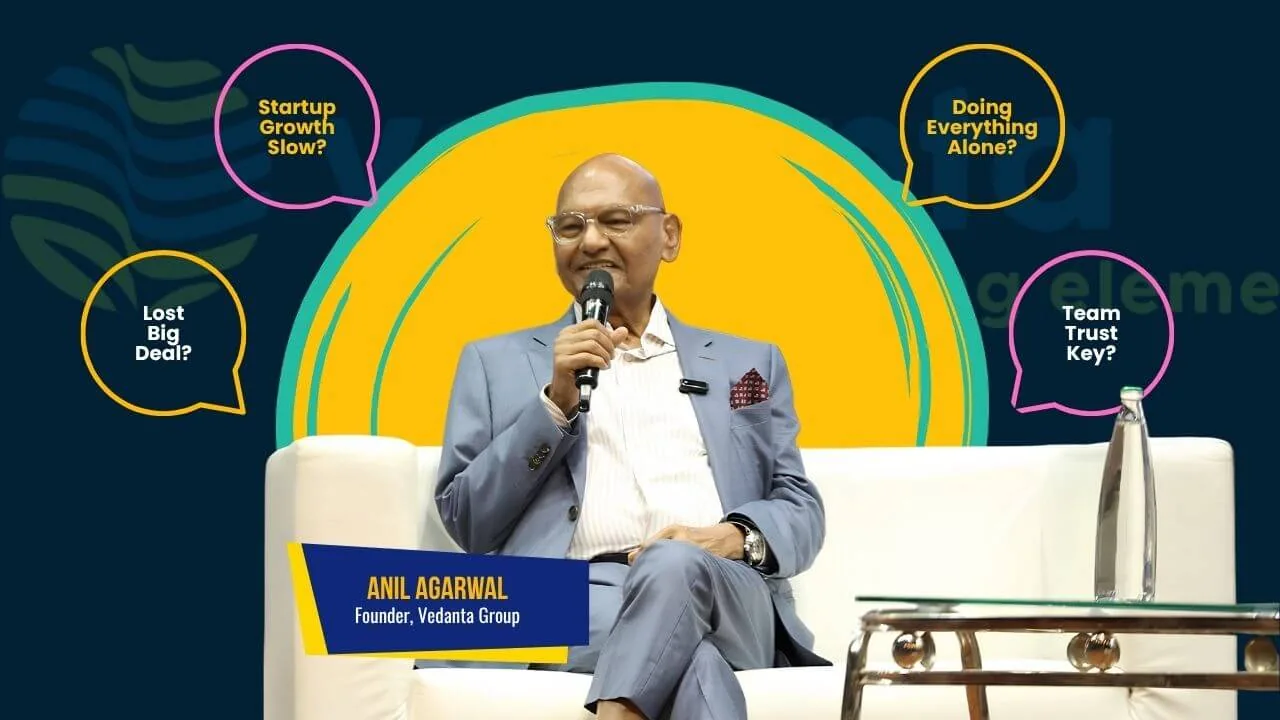
Are you a startup founder who tries to do almost everything alone? Do you also feel that if you don’t do the work yourself, it won’t get done? Famous businessman and Vedanta Group founder Anil Agarwal has a valuable advice for such leaders.
He said that handling every task alone can slow down business growth and even bring big money risks. Remembering his own early business days, Agarwal explained that not sharing responsibilities often becomes a major hurdle for new companies and growing startups.
The billionaire businessman shared these thoughts while remembering a failure from his early business days. He said many first-time entrepreneurs make the mistake of working like a “one-man army,” thinking that keeping an eye on every department themselves will ensure success. But Agarwal warned that this habit stops the company from growing bigger and also increases the chance of mistakes in daily operations.
What Slows Growth?
Agarwal explained how, in the beginning, he tried to run everything by himself. He was handling buying materials, finding clients, and even banking work — all at the same time, without any team support. This “all-in-one” style later caused a big problem: the company lost an important contract because of a delay in paperwork.
“In my early days, I was working like a one-man army,” Agarwal recalled while talking about his first business model. “My mornings went in calling buyers, afternoons with suppliers, and evenings at the bank. I believed that doing everything myself was the only way to succeed — even if it took every single minute of my day.”
I believe every leader should ask themselves one big question: What is the value of my one hour?— Anil Agarwal, Founder, Vedanta Resources
The turning point came when the lack of office support directly hurt the company’s accounts. “One day, just because I could not fill a form on time, a very big deal slipped out of my hands,” Agarwal said. “I was completely broken. That was the moment I understood that even after working day and night, my way of managing everything alone was wrong.”
How to Scale Ops?
After this setback, Agarwal changed the way his company worked. He brought in professional help to handle daily office tasks. The first step was hiring a clerk, which freed up his time to focus on money planning and big business decisions. This new way of working became the base for growing Vedanta into a global natural resources giant.
Industry experts say that many new founders often get stuck in micro-managing every small detail, which takes away focus from building long-term value. Agarwal advised that leaders should check the “cost versus benefit” of their own working hours — to see if their time is being used in the best way or wasted on small tasks.
“I believe every leader should ask themselves one big question: What is the value of my one hour?” Agarwal said while explaining how to grow a team. “If the work of that one hour can be done by someone else, then you should hire that person. A leader’s time must be spent where it really matters — in achieving bigger goals for the company.”
Business experts also agree with this view. They say that trust in the team and proper division of work is very important to turn small companies into strong and lasting businesses. For today’s Indian startup founders, who often face tight money situations, this advice highlights the need to build a solid mid-level management team early in the journey.
About Vedanta
Vedanta Resources is a global company that works in many natural resources. Its main businesses are in aluminum, zinc, lead, silver, copper, iron ore, steel, and oil and gas. Founded by Anil Agarwal, the group runs operations in India, Africa, Ireland, and Australia. It gives jobs to thousands of professionals and plays a big role in building industries and producing key materials worldwide.