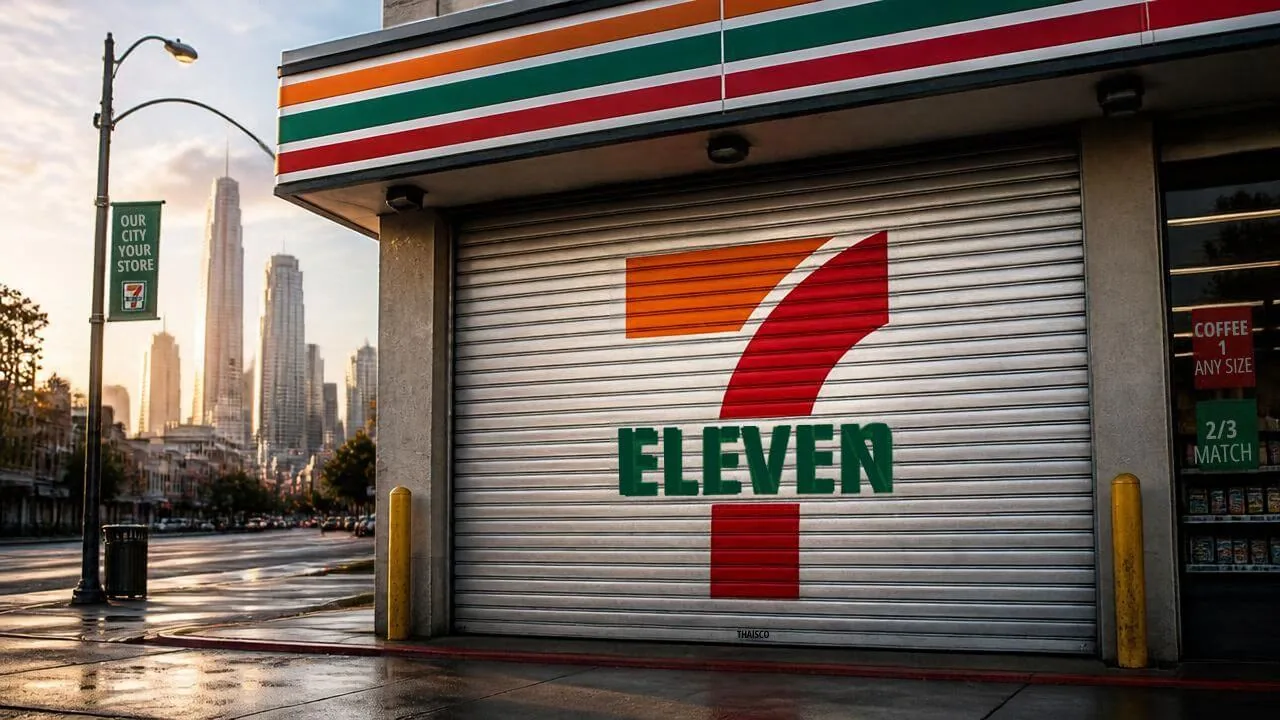
7-Eleven has exited the Indian market after the closure of its remaining 31 stores in Mumbai and Pune. The shutdown ends the convenience-store chain’s operations in India about five years after it opened its first outlets in the country.
The stores were operated by Reliance Retail, which brought 7-Eleven to India through a master franchise arrangement. The final outlets were closed on September 30, bringing the current India venture to an end.
The exit follows a period of financial pressure for the business. In FY26, the India operation reported revenue of about Rs 92 crore while losses were close to Rs 90 crore, according to the figures provided.
Stores Close Across Cities
7-Eleven had reached about 60 outlets at its peak, but the network was later reduced as the business struggled to build a profitable store base. The remaining outlets were concentrated in Mumbai and Pune.
Employees working in the 7-Eleven business have been absorbed into other grocery and neighbourhood retail formats operated by Reliance, according to the information provided.
The business faced several cost and demand-related challenges. High rents and relatively low transaction values put pressure on individual stores, while the limited size of the network made it harder to spread operating costs across a larger footprint.
Retail Competition
The format also faced competition from the established kirana network. Local stores remain widely available in residential areas and continue to serve everyday grocery and household purchases.
Quick-commerce companies added another challenge. Rapid delivery has changed the way many urban consumers buy groceries, snacks and other daily-use products, reducing the need for some purchases from a physical convenience store.
The retail environment also differs from markets where convenience stores have a larger role in ready-to-eat food and everyday shopping. In Indian cities, fresh food from neighbourhood outlets and street vendors remains an important part of consumer spending.
7-Eleven in India
7-Eleven entered India in October 2021 through a master franchise partnership with Reliance Retail. Reliance operated the business through its subsidiary, 7-India Convenience Retail, while 7-Eleven provided the international brand and convenience-store format.
The business was designed around small-format stores selling packaged food, beverages, groceries and other everyday products. The initial expansion focused on Mumbai and later Pune rather than creating a nationwide network.
The partnership was intended to introduce the 7-Eleven format to Indian urban consumers. However, the number of stores later fell from the peak of around 60 to 31 before the final closures.
Costs Pressure Model
The financial figures indicate the difficulty of operating the format at its existing scale. Revenue of Rs 92 crore against losses of nearly Rs 90 crore in FY26 left little room for further expansion without changes to the business model or cost structure.
For convenience retailers, store location is particularly important because sales depend heavily on regular customer traffic. High rental expenses can therefore become difficult to absorb when average purchases remain relatively small.
The rise of quick commerce has further changed this equation. Consumers can increasingly order many of the same packaged products delivered to their homes, while kirana stores continue to offer nearby access without the cost structure of a large organised chain.
Future India Entry
The closure does not necessarily rule out a future India entry for 7-Eleven. Seven & i Holdings, the Japanese parent group, has indicated that it could examine other opportunities in the market.
A future attempt could involve a different partner, store format or operating structure. However, no new India expansion plan has been announced following the closure of the existing network.
Globally, 7-Eleven traces its origins to 1927 in the United States and is now owned by Japan-based Seven & i Holdings. The chain operates more than 85,000 stores across markets worldwide.
For now, the closure of the last 31 outlets marks the end of the existing 7-Eleven and Reliance Retail venture. The development also highlights the difficulty faced by conventional convenience-store formats in a market where neighbourhood retailers and fast delivery services compete for the same everyday purchases.