Banarasi saree industry is undergoing major change as the Uttar Pradesh government uses its One District One Product (ODOP) scheme to support artisans and small businesses. Launched in 2018, the programme helps improve production, access to finance, and wider market reach.
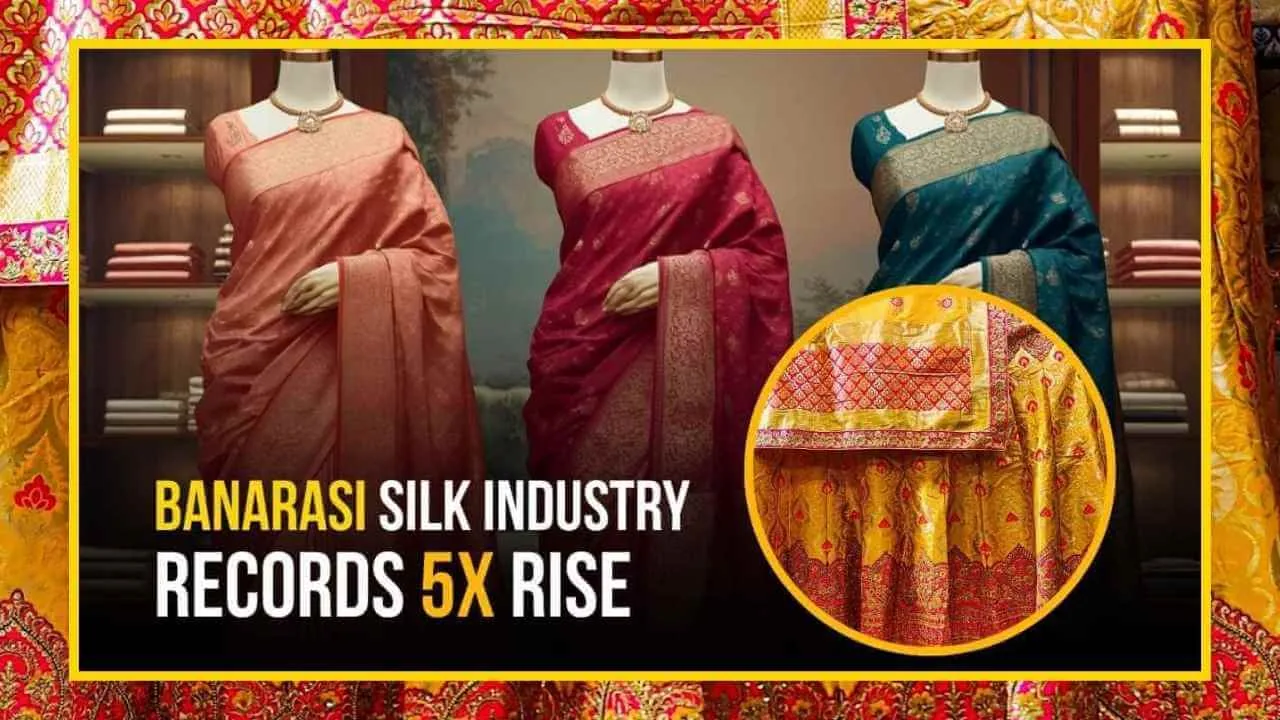
Exports of Banarasi sarees and related products have grown about five times since the scheme began. This growth creates new opportunities for weavers and businesses, though rising costs and machine made imitations continue to add pressure.
Saree Producers Situation
For years, small Banarasi saree producers worked as cottage businesses with limited machinery. Many depended on outside workshops for dyeing, printing, and finishing.
Government is addressing this through Common Facility Centres. These centres provide shared access to costly equipment, allowing small businesses to complete multiple processes in one place. This reduces delays, improves efficiency, and helps smaller units handle larger orders.
Credit support is another key part of ODOP. District industry records show around 820 businesses have received credit since the scheme started. Subsidies of Rs 31 crore have been provided against loans worth Rs 126 crore.
This funding helps entrepreneurs expand units and create jobs beyond weaving. New roles are emerging in design, machine operation, finishing, and quality control, giving the industry a broader economic base.
Competition Pressure
International demand is one of the clearest signs of progress. Banarasi saree exports have risen fivefold since 2018, supported by government help for exhibitions and promotions.
Subsidised stalls and travel support allow artisans to meet buyers outside traditional markets. This exposure is also encouraging younger people to see the craft as a business opportunity rather than only a family tradition.
Despite growth, challenges remain. Powerloom products that copy Banarasi designs are a major concern for handloom producers.
Machine made sarees are faster and cheaper to produce. When sold as authentic handloom, customers may struggle to tell the difference. This reduces the value of genuine craftsmanship and pressures artisan incomes.
Rising raw material prices are another issue. Many artisans still rely on traditional credit systems like ‘batta’. Payment delays add financial stress.
The industry also faces a shortage of master weavers. Attracting younger workers is vital, but many prefer jobs with more predictable income and conditions.
Original Banarasi Sarees
Banarasi sarees are traditional handwoven sarees originally from Varanasi, Uttar Pradesh. They are known for detailed weaving, rich fabrics, and intricate motifs, often with zari work.
The craft has a long history and is a key part of Indian textile heritage. Genuine handloom Banarasi sarees are valued for the skill and time required, making authenticity and quality critical.
ODOP programme is linking traditional industries with modern infrastructure, finance, and organised markets. For Banarasi sarees, the focus is shifting from preservation to commercial strength.
Next stage will depend on protecting authentic products, using GI identification, controlling costs, and creating better opportunities for young artisans. Sustainable production and stronger digital and international sales channels could help maintain momentum.