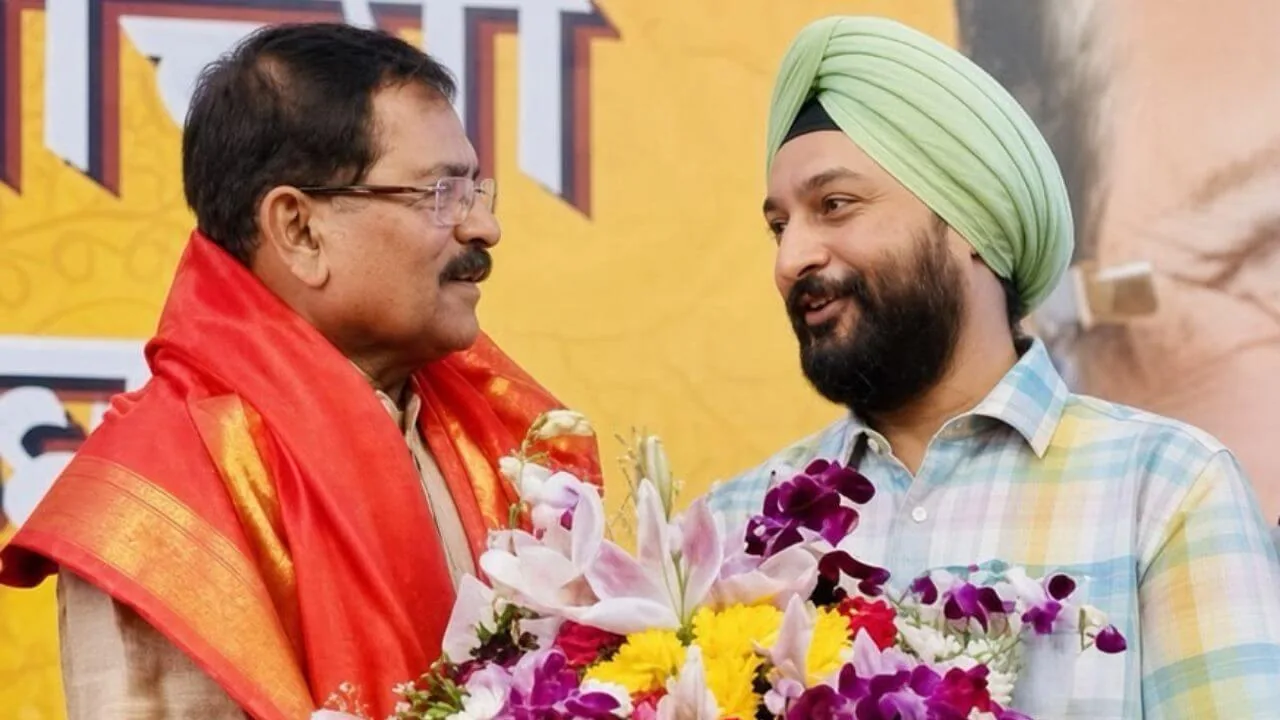
Minister of State for New and Renewable Energy and Power Shripad Yesso Naik met ICL Climetech CEO Paramjeet Singh Sehra to discuss new technology that turns waste biomass into clean energy. Naik was briefed on how this system works to increase green power production.
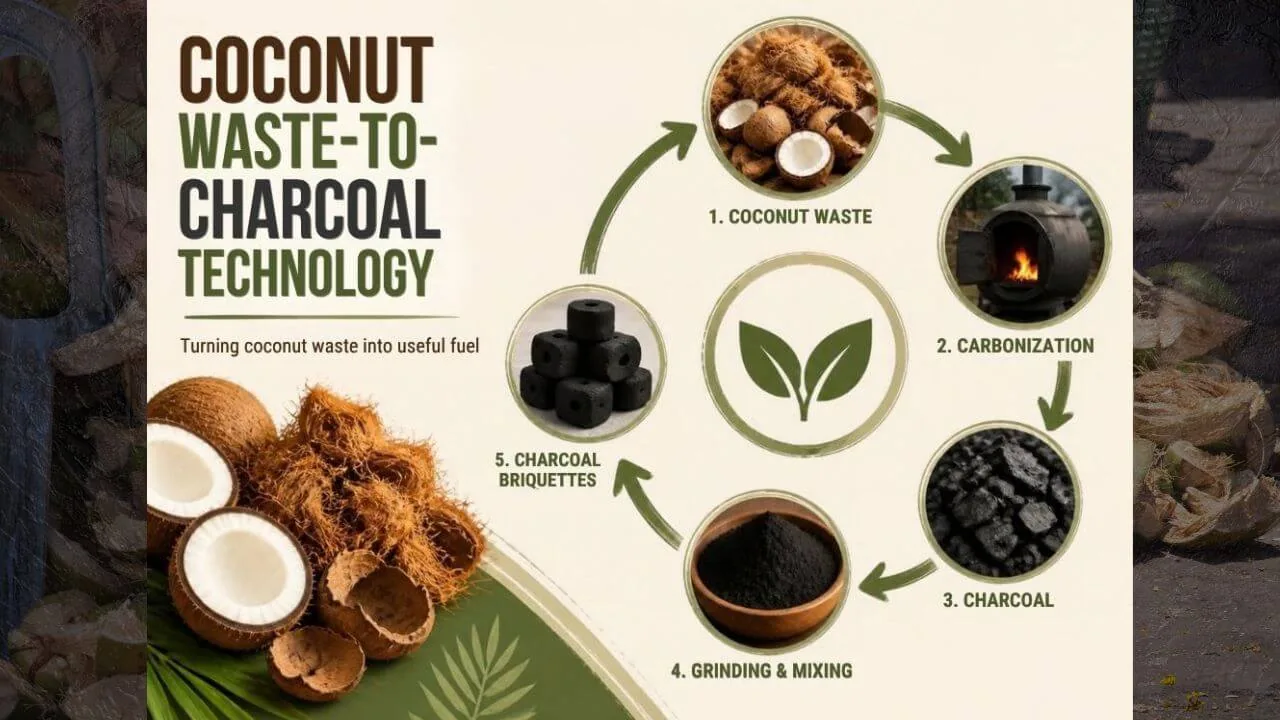
Sehra met with minister on Saturday in Goa and discussed the use of coconut waste-to-charcoal technology to process coconut shells, husks and other biomass residue generated in coastal regions.
Entire discussion focused on a biomass reactor developed by Gurugram-based ICL Climetech. According to the company, the reactor can process different biomass materials and convert them into charcoal, wood vinegar and tar.
Waste-to-Charcoal Tech
Tech company has proposed using the reactor to process coconut residue that is otherwise dumped at different locations. Coconut shells and husks are among the materials identified for processing under the proposed approach.
New technology is based on converting biomass into solid and liquid products rather than treating the residue only as waste. The charcoal produced through the process can be used in metallurgical applications and industrial process heating, according to the company.
Wood vinegar and tar are also recovered during the conversion process. These products form additional outputs from the same biomass feedstock.
ICL Climetech is based in Gurugram and works in heat transfer and biomass conversion. Its technology platform is designed to process different types of biomass feedstock.
The company has positioned the technology for areas where agricultural and other organic residues are available in significant quantities. Coconut-growing regions are among the areas where the company sees a possible application for the reactor.
The meeting also covered the possibility of taking the technology forward under broader renewable energy and bioenergy initiatives. Sehra sought guidance from the Ministry of New and Renewable Energy on the next steps.
Company Seeks Guidance
Sehra said the company was looking to work through the ministry to explore applications for the technology in biomass and waste management.
“Coconut residue is a hazard where it is dumped, and it destroys the usefulness of the sites on which it is piled. Our reactor is built to take this material, and other biomass, and return charcoal for industry, together with wood vinegar and tar,” Sehra said.
The meeting was described as a courtesy call and technology briefing. There was no announcement of a government order, financial support or commercial agreement arising from the meeting.
ICL Climetech is expected to take the proposal forward through the relevant channels of the Ministry of New and Renewable Energy. Any government-backed deployment or wider adoption would depend on subsequent evaluation and approvals.
Non-Conventional Fuel
The discussion comes against the backdrop of efforts to find uses for agricultural and organic residue while reducing dependence on conventional industrial fuels. Biomass conversion is one approach in which waste material is processed into fuel or other products.
For coconut-producing regions, shells and husks can form a substantial residue stream. The proposed application of the ICL Climetech reactor would involve collecting such material and processing it into charcoal and other outputs.
At this stage, however, the development remains a technology proposal discussed with the ministry. Details on any pilot project, location, investment or government partnership have not been announced.
The next steps will depend on discussions between ICL Climetech and the Ministry of New and Renewable Energy. The company has said it will pursue the proposal through the ministry’s appropriate channels.