NPCI (National Payments Corporation of India) has postponed the implementation of MDR charges on select UPI (Unified Payments Interface) transactions until after Diwali. The revised date for introducing the charges will be announced separately.
The decision was taken by the UPI and Services Steering Committee on October 13, two days before the framework was originally scheduled to come into effect. The deferral comes during the festive period, when digital payments typically see increased activity.
MDR framework announced on September 15 covers selected person-to-merchant (P2M) UPI transactions above Rs 2,000. Under the proposed structure, eligible transactions will carry an MDR of 0.4%, subject to a maximum charge of Rs 300 for transactions of Rs 75,000 and above.
UPI MDR Rollout Moves
New revised framework does not apply the same rate across all merchant categories. Transactions above Rs 2,000 in sectors such as railways, telecommunications, insurance, fuel and agricultural inputs will attract a flat MDR of Rs 5.
Capital market transactions will have a separate rate of 0.02%, with the charge capped at Rs 300 per transaction. The rates are part of the framework intended to create a revenue mechanism within the UPI payment network.
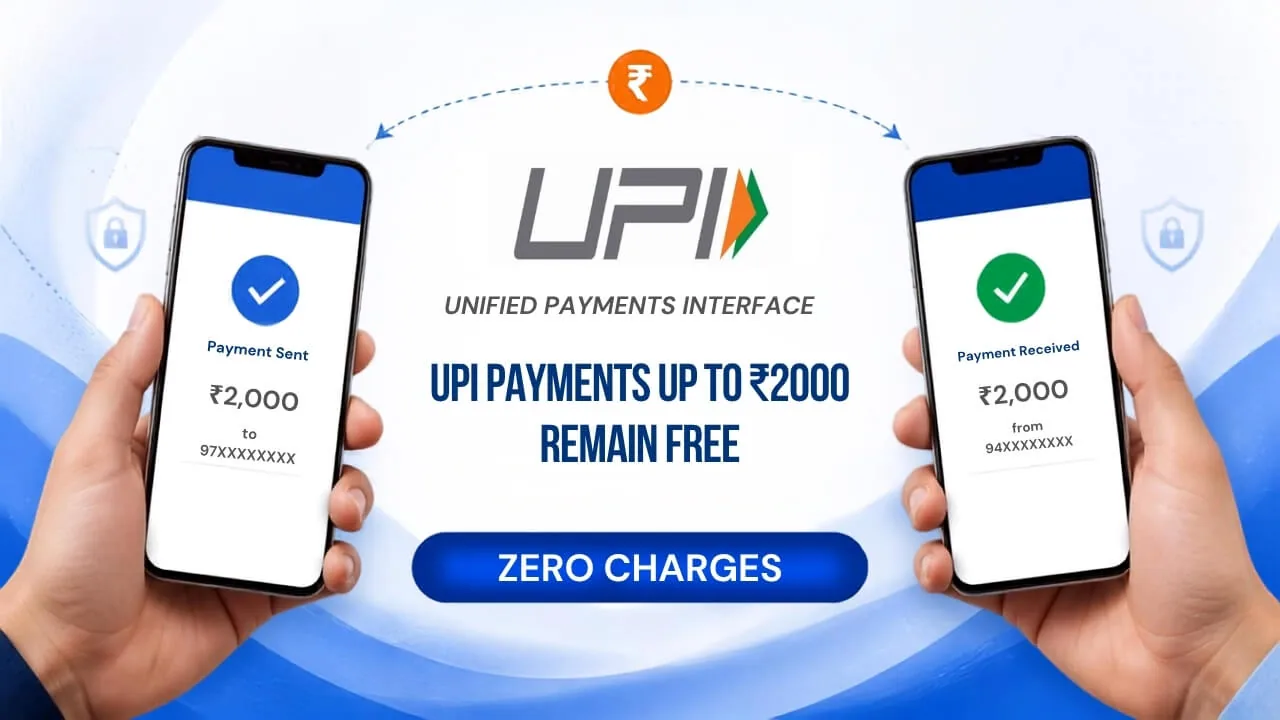
Person-to-person transfers will continue to remain outside the MDR framework. Merchant payments of up to Rs 2,000 will also remain free, while small merchants covered under the person-to-person merchant (P2PM) framework will continue to be exempt.
Most Payments Are Free
According to the government, around 96% of merchant transactions will remain unaffected by the revised framework. The proposed charges therefore cover a relatively specific segment of UPI merchant payments rather than the wider payment system.
New framework also does not permit merchants to recover the MDR directly from customers. This means the proposed merchant-side charge cannot be added separately to the amount paid by a consumer during a UPI transaction.
For consumers, the basic UPI experience remains unchanged for person-to-person transfers and merchant payments up to Rs 2,000. The impact of the framework will mainly depend on the type and value of merchant transaction once the new rules take effect.
Charges Vary by Sector
Proposed MDR structure has different rates for different transaction categories. The 0.4% rate applies to eligible P2M transactions above Rs 2,000, while specified sectors such as fuel and telecommunications have been placed under a fixed Rs 5 charge for qualifying transactions.
The separate treatment of capital market payments also means that the final cost for merchants will depend on the category under which a transaction falls. The Rs 300 cap provides an upper limit on the MDR for transactions where the percentage-based rates apply.
The framework is not a tax imposed by the government. Instead, the charges are to be distributed among participants in the UPI payment ecosystem. The government and NPCI will not collect the MDR as tax revenue.
What is UPI MDR
Merchant discount rate, or MDR, is a fee charged on certain digital payments made by customers to merchants. It is generally distributed among participants involved in processing a digital payment, such as payment service providers, banks and other entities in the payment network.
For UPI, the proposed MDR framework is aimed at creating a revenue stream to support the costs linked to payment infrastructure, security and merchant acceptance networks. The charge applies to eligible merchant transactions rather than person-to-person transfers.
UPI Framework
Proposed MDR framework is intended to address the long-term financial sustainability of the UPI ecosystem as transaction volumes continue to grow. The funds generated through the charges are expected to support investments in payment infrastructure and security.
October 13 decision does not cancel the framework. It only postpones its implementation beyond Diwali, with NPCI expected to communicate a fresh date separately.
Until then, the existing payment arrangement continues. The eventual rollout will determine how eligible merchants respond to the new charges, while transactions covered by the exemptions will continue without MDR.