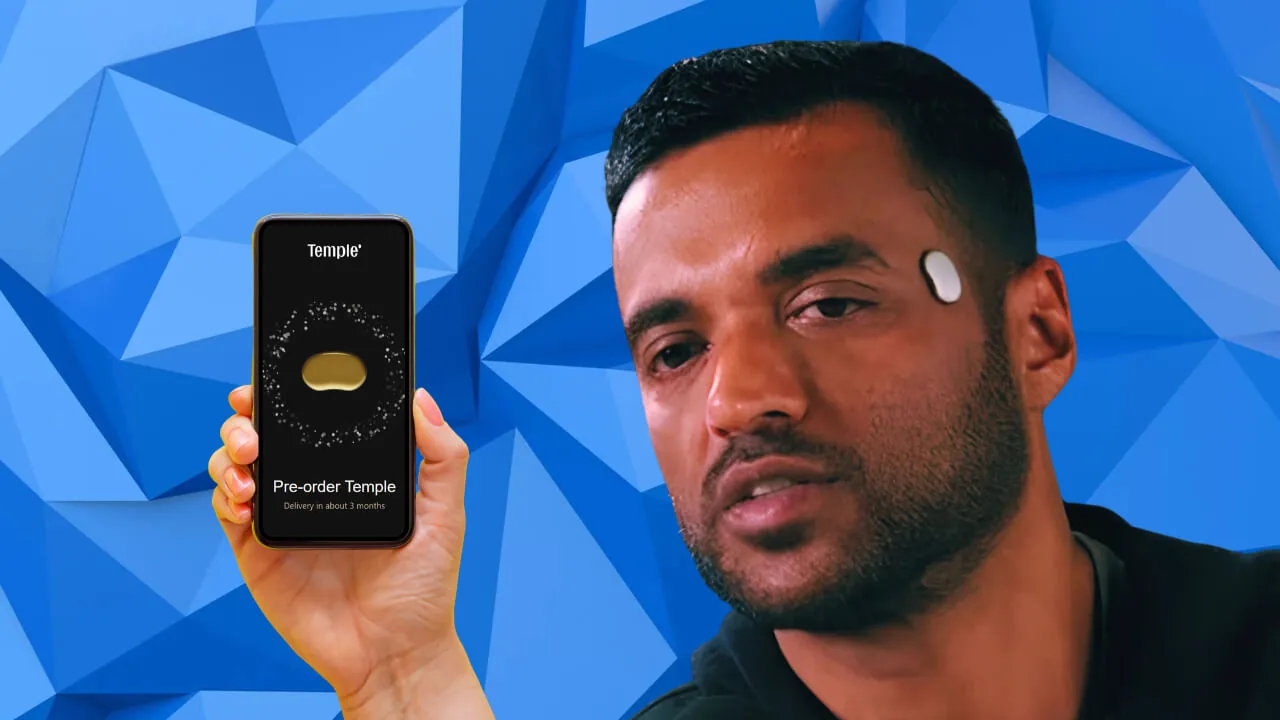
Zomato founder Deepinder Goyal has said that Temple, his latest wearable tech device, is being developed for international customers rather than the Indian market. Priced at Rs 85,000, the device is expected to generate no more than 1% of its sales from India, according to Goyal.
In a post on social media platform X on November 9, 2026, Goyal responded to criticism of the product, particularly questions raised by doctors about its price, scientific basis and claimed ability to monitor signals linked to brain activity.
"Temple is not made for India. It’s made for the world," Goyal wrote, explaining that the company had priced the device based on its assessment of the product value rather than the purchasing capacity of Indian consumers.
Temple is currently available for pre-orders, while deliveries are expected to begin sometime in 2027. The product marks Goyal entry into the consumer wearable technology market through his new venture.
Temple Targets Global Buyers
Goyal said the company was not positioning Temple as an affordable device for the mass Indian market. He also rejected the idea that customers should purchase it simply to support an Indian startup.
"Please do not support us because we are an Indian startup. We want to compete globally," he wrote.
Responding to concerns about the Rs 85,000 price, Goyal said potential buyers who were uncertain about the product could wait for customer reviews before making a purchase decision.
The pricing and international focus have become part of the discussion around Temple, particularly because the product is being introduced by an Indian entrepreneur but is expected to depend mainly on overseas buyers.
Company Explains Device Purpose
Goyal has described Temple as a fitness and AI device rather than a medical product. He said it has not been proven to diagnose or prevent any disease and should not be treated as a replacement for medical consultation.
The distinction is important because some of the technology claims have attracted questions from medical professionals. Goyal said the company would obtain regulatory approvals wherever required before offering the product in markets where such clearances are necessary.
Temple is not made for India. It’s made for the world. Please do not support us because we are an Indian startup. We want to compete globally. Social media is not the regulator for Temple.— Deepinder Goyal, Founder, Zomato
He also said that people could wait for peer-reviewed scientific evidence before deciding whether to trust the technology. "You are free to sit on the fence until peer reviewed proof arrives. You are free to not believe it even then," he added.
Doctors Question Tech Claims
One of the prominent critics of Temple is Cyriac Abby Philips, a hepatologist widely known on X as The Liver Doc. He has questioned whether a sensor positioned near the temple can accurately measure blood flow inside the brain.
Philips has also raised concerns about the research methods used to support the device claims and the absence of peer-reviewed evidence establishing its performance.
The questions mainly concern the relationship between signals detected near the side of the head and actual changes in blood flow within the brain. Independent scientific validation will be important in assessing the accuracy and usefulness of such measurements.
Goyal has not presented Temple as a clinically approved medical device. However, the questions raised by doctors underline the need to distinguish between a fitness monitoring product and technology that can make medically reliable measurements.
What is Temple Device
Temple is a small wearable device designed to attach to the side of the head. According to the company, it uses optical sensors to track physiological signals associated with blood flow in the brain.
One of its features, called BrainFlow, is designed to monitor changes in cerebral blood flow. Goyal has also identified another feature, Entropy, as a key part of the product, although detailed information about its functioning and practical applications has not yet been provided.
The company has introduced the concept of Roomdeaf AI to describe the device as a privacy-focused AI companion. The product is currently accepting pre-orders at Rs 85,000, with shipping expected to begin in 2027. Its actual performance, accuracy and usefulness will become clearer after wider testing and customer use.
AI Wearables Face Scrutiny
The Temple launch comes as technology companies explore wearable devices that combine sensors, data collection and AI-based features. Such products aim to provide users with additional information about their physical activity and other body-related signals.
However, devices that make claims connected to human physiology also face questions about measurement accuracy, scientific testing, data privacy and regulatory requirements. These factors become particularly important when a product is discussed in connection with brain activity or other medical measurements.
For Temple, the next stage will involve moving from pre-orders to actual deliveries and demonstrating whether its technology performs as described. The company will also need to address questions around scientific evidence and the distinction between fitness tracking and medical applications.
Deepinder Goyal has made clear that the product is intended for a global customer base and is not being positioned as a mass-market Indian wearable. Its commercial response and the independent assessment of its technology will determine how it develops after its planned 2027 launch.