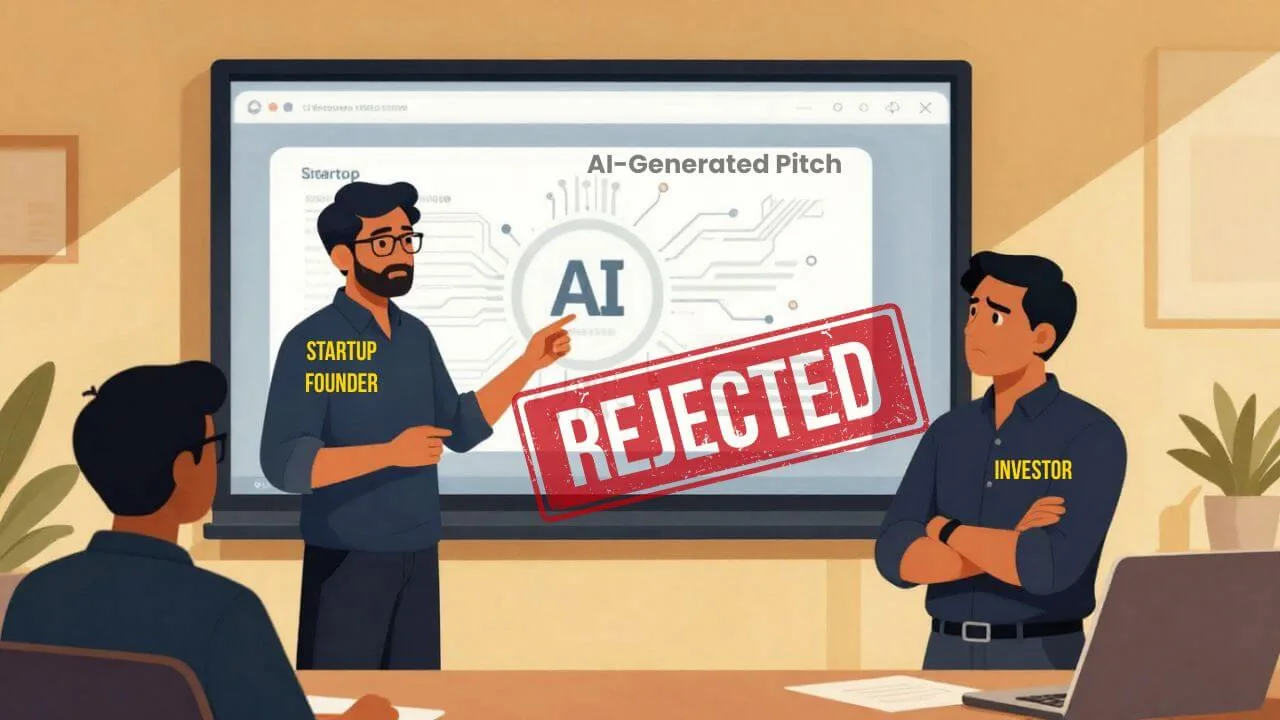
Artificial intelligence is stepping onto the factory floor. Industrial AI startup Morsa has raised $1.5 million in funding to build an AI Chief Operating Officer for manufacturing plants. The new system aims to automate daily plant decisions, cut downtime, and boost efficiency across industrial units using smart real-time data.
Delhi-based manufacturing technology startup Morsa has raised $1.5 million in a pre-seed funding round led by Silicon Valley-based Jackson Square Ventures (JSV). The a16z Scout Fund also participated in the round.
The startup, which operates under its parent company Lunar Inc., will use the capital for product development and to expand deployments across manufacturing plants in India and the United States.
Founded in June 2026, Morsa is developing software that it describes as an "AI COO" for manufacturing plants. The platform is designed to monitor factory operations, identify delays, assign tasks and follow up with workers and suppliers through communication channels already used by businesses.
AI Manages Factory Ops
Unlike conventional factory software that often requires employees to work through separate dashboards, Morsa connects with existing Enterprise Resource Planning (ERP) and Manufacturing Execution Systems (MES). It also integrates with email and messaging platforms such as WhatsApp, Microsoft Teams and Slack.
Software reads operational data and conversations taking place among workers and managers. Based on this information, it identifies bottlenecks, assigns responsibility for pending work, follows up with suppliers and adjusts production schedules when required.
System also checks whether assigned tasks have been completed. This allows managers to track operational commitments without depending entirely on manual updates and separate reporting processes.
Startup aims to address delays that can arise when information is spread across different departments, messaging groups and factory management systems.
Early Deployment Results
One of Morsa early commercial deployments was at J4S, a glass manufacturing facility with 120 employees. The startup connected its software with the factory existing ERP system and operational WhatsApp groups.
Over a four-week period, the system tracked around 900 operational commitments. According to Morsa, the share of tasks completed on time increased from 30% to 75% during the period.
Company said its platform is now active across multiple manufacturing plants, supporting 212 personnel through 75 operational group chats. These deployments include a Tier-1 automotive supplier, whose name has not been disclosed.
Figures and performance results have been shared by the startup. Independent details about the deployment outcomes have not been provided.
Who is Founder of Morsa
Morsa was founded by Satvik Kapoor, 22, who serves as CEO, and Vedant Singh, 19, who is the company CTO.
Kapoor studied computer science at the University of Michigan and graduated in 2026. He has previously worked at Amazon, Perplexity and startups backed by Y Combinator. He also grew up around his family manufacturing businesses in Delhi and handled sales and operations for the family enterprise in the US while studying.
Vedant is from Lucknow and began programming at the age of 13. According to the startup, he built a hospital-bed availability platform during the Covid-19 pandemic that served more than 500,000 users. The company also said he has won around 11 hackathons since moving to the US.
Next breakthrough is not going to be about smarter AI models. It is about building the infrastructure that lets agents understand the state of an entire factory, make decisions, execute them, and learn to run the factory themselves.— Vedant Singh, CTO, Morsa
Two founders met through Tech Twitter and later won first place together at a Y Combinator hackathon in San Francisco. After participating in more hackathons and working on open-source projects, they decided to build a startup together in early 2026.
Kapoor said his experience around family-owned factories helped him understand the operational challenges faced by manufacturers. "I grew up around my family's factories and have worked across eight of them, and the limit is never the machines. It's how fast a plant can decide and act," he said.
Singh said the next stage of factory automation would involve systems that can understand operations and take action. "The next breakthrough is not going to be about smarter AI models. It is about building the infrastructure that lets agents understand the state of an entire factory, make decisions, execute them, and learn to run the factory themselves," he said.
AI Role in Ops Automation
Traditional manufacturing operations often depend on supervisors collecting updates from workers, checking production records, contacting suppliers and coordinating between departments. Much of this work takes place through phone calls, spreadsheets, emails and separate software systems.
Newer technology startups are using AI agents to bring these activities together. For example, an AI system can identify that a raw material delivery is delayed, alert the responsible employee, contact the supplier and suggest changes to the production schedule. A human manager can still review important decisions, particularly those involving safety, cost or major operational changes.
This approach is different from using automation only for physical tasks such as moving goods or operating machinery. It focuses on managing information, decisions and coordination across an entire business operation.
Morsa is attempting to apply this model to manufacturing plants by connecting existing software and communication channels rather than asking employees to adopt a completely new system. Its latest funding will support further development and expansion of these deployments.