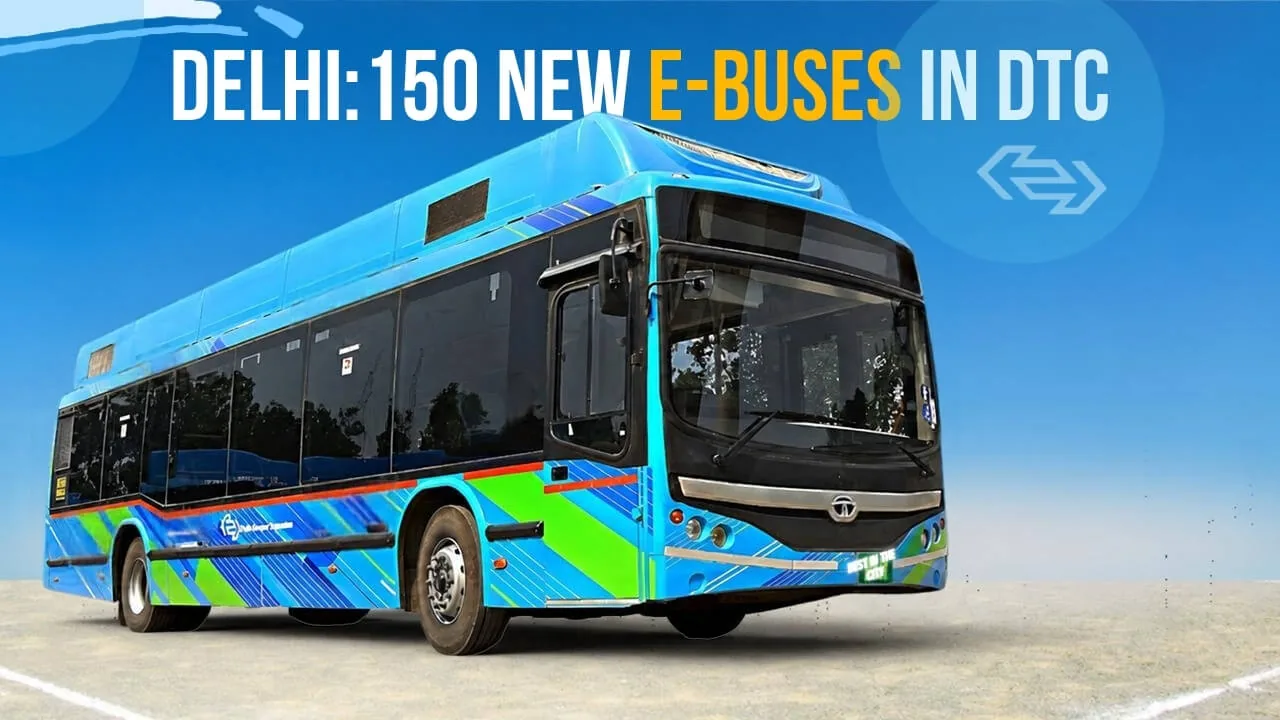
Delhi has added 150 electric buses to its public transport network, taking the number of zero-emission buses in the capital to 5,238 as the government continues to expand the city bus fleet.
CM Rekha Gupta and Union Environment Minister Bhupender Yadav inducted the buses at Swami Vivekanand ISBT in Anand Vihar. The latest addition comes as Delhi looks to gradually replace conventional buses and increase electric vehicles on public routes.
Overall buses operated under the Delhi public bus system now stands at 6,988 buses, including 5,238 electric and 1,750 CNG buses, according to figures provided by the government. The administration has set a target of increasing the fleet to nearly 14,000 buses by the end of FY2028-29.
DTC Electric Buses
Along with the new buses, four charging stations have been opened at bus depots in Nand Nagri, Rohini Sector-37, Nangloi and Keshopur. These facilities will support charging requirements as more electric buses are deployed across the city.
Charging capacity remains an important part of the transition because a larger electric fleet requires depots to handle charging, parking and daily operations without affecting route schedules. Further fleet additions will therefore have to be accompanied by expansion of supporting infrastructure.
Delhi government is using electric buses as part of its wider plan to modernise public transport and reduce dependence on diesel and CNG vehicles. Road transport is also among the sources considered in Delhi pollution-control measures, although the impact of additional electric buses will depend on their deployment and utilisation.
Targets Larger Fleet
The planned expansion to about 14,000 buses by FY2028-29 would more than double the current fleet if the target is achieved. It would also require the government to add thousands of buses over the next few years while developing depots and charging infrastructure.
For commuters, the number of buses alone will not determine service quality. Route availability, frequency, maintenance, charging turnaround time and the number of buses actually available for daily operations will remain important measures as the fleet expands.
Recent addition of 150 buses is therefore one part of a longer transition rather than a major change in daily capacity by itself. Delhi will need continued bus procurement and infrastructure development to reach the fleet size planned for 2028-29.
E-Charging Network
The four new charging facilities are located at existing depots across different parts of Delhi. Using depot-based charging allows buses to recharge during scheduled periods and return to their assigned routes.
As electric buses form a larger share of the fleet, power availability and charging capacity at depots will become more important. A shortage of charging points or longer charging times could reduce the number of buses available during operating hours.
The administration will also have to manage the remaining CNG fleet during the transition. Delhi currently has 1,750 CNG buses alongside the 5,238 electric buses cited in the latest fleet figures, meaning conventional buses continue to account for part of daily services.
About DTC
Delhi Transport Corporation (DTC) is the state-owned public bus operator serving Delhi and routes connecting the capital with parts of the National Capital Region and neighbouring states. Delhi currently has an overall public bus fleet of 6,988 buses based on the latest figures cited with this induction, comprising 5,238 electric buses and 1,750 CNG buses.
However, these figures cover the wider public bus network and should not be read as the standalone DTC-owned fleet, as Delhi bus services also include vehicles operated under other government arrangements.
DTC operates through a network of bus depots spread across Delhi, while some services extend beyond the capital to neighbouring states. Depot numbers have changed over time as facilities are added, converted for electric operations or reorganised, so a single current split between depots inside and outside Delhi should be taken from the latest DTC operational disclosure rather than older fleet records.
The new charging stations at Nand Nagri, Rohini Sector-37, Nangloi and Keshopur add to the infrastructure needed for electric operations. Depot conversion will remain closely linked to future bus additions because electric vehicles require dedicated charging and power facilities.
Expansion Continues
Delhi has been moving towards a predominantly electric public bus network while retaining CNG buses during the transition. The latest induction raises the electric share further, but the government still has a substantial gap to cover before reaching the planned 14,000-bus fleet.
The next phase will depend on the pace of procurement, commissioning of charging depots and deployment of buses on routes where additional capacity is required. Maintenance and fleet availability will also determine how much of the expanded fleet remains on the road each day.
For now, the 150-bus induction takes the stated electric fleet to 5,238. The larger test will be whether Delhi can maintain the planned pace of additions and supporting infrastructure through FY2028-29.