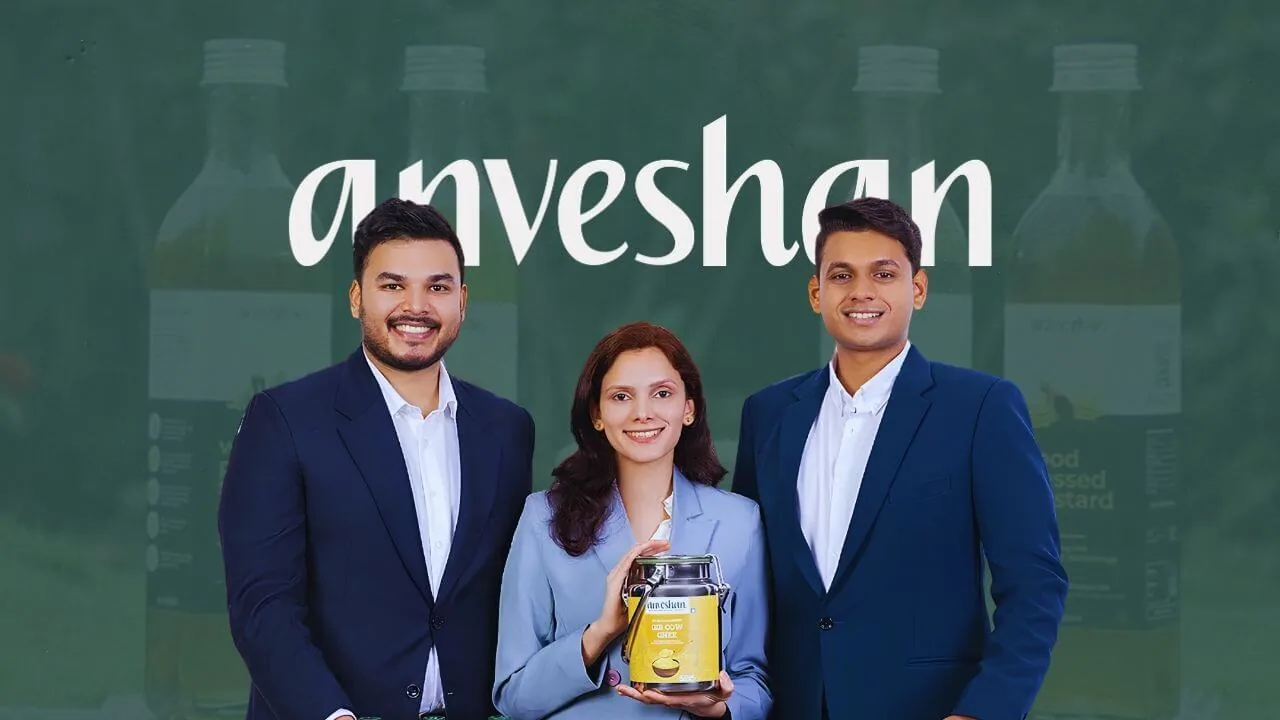
Clean-label food startup Anveshan has raised Rs 150 crore (about $16 million) in a Series B funding round led by Vertex Ventures Southeast Asia & India, as the company looks to expand manufacturing, strengthen distribution, and accelerate its push into India's growing market for minimally processed food products.
The round also saw participation from International Finance Corporation (IFC), Swiggy co-founder Sri Harsha Majety, and existing investors including Wipro Consumer Care Ventures, Titan Capital Winners Fund, Force Ventures, and boAt co-founders Aman Gupta and Sameer Mehta.
The latest funding comes at a time when consumer demand for food products positioned around transparency, traditional processing methods, and natural ingredients continues to attract investor interest. Startups in the segment have increasingly focused on building direct sourcing networks and supply chains to differentiate themselves from mass-market packaged food brands.
Founded in 2020 by Kuldeep Parewa, Akhil Kansal, and Aayushi Khandelwal, Anveshan sells products such as A2 bilona ghee, cold-pressed oils, raw honey, atta, and other nutrition-focused staples. The company works with a network of rural producers and micro entrepreneurs, sourcing products through traditional production methods while targeting urban consumers seeking cleaner food alternatives.
Expansion Strategy
According to the company, the fresh capital will be deployed across manufacturing, product development, offline distribution, and digital commerce. Investments are also planned in sourcing infrastructure, procurement systems, quality assurance processes, and testing capabilities.
The company is additionally looking to deepen its partnerships with rural producers and micro entrepreneurs, an area that forms a core part of its operating model. Building stronger sourcing systems has become increasingly important for food startups as they seek consistency in product quality while scaling volumes.
Industry executives note that maintaining quality standards becomes more challenging as brands expand into multiple product categories and geographies. For companies operating in premium food segments, supply chain reliability and product traceability are often as important as marketing and customer acquisition.
Growth Momentum
Anveshan has reported strong growth over the past two years, although profitability remains a work in progress. For the financial year ended March 2025, the company posted operating revenue of Rs 77.08 crore, up 64.6% from Rs 46.84 crore in FY24. However, losses widened to Rs 11.88 crore during the period, compared with Rs 5.74 crore a year earlier.
The widening losses reflect the investment cycle that many consumer brands undergo as they increase spending on customer acquisition, distribution, hiring, and product expansion. The company appears to be prioritising scale and market penetration over short-term profitability.
Despite the losses, Anveshan claims to be operating at an annual revenue run rate of Rs 280-300 crore, indicating a significant acceleration in sales after FY25. The company is now targeting Rs 1,000 crore in revenue over the next 24 to 30 months, a goal that would require substantial expansion across both online and offline channels.
Competitive Market
The funding also highlights continued investor appetite for food and nutrition brands that combine traditional products with modern retail and digital distribution models.
Over the past few years, consumers have shown increased interest in categories such as cold-pressed oils, natural sweeteners, premium dairy products, and minimally processed staples. This trend has created opportunities for emerging brands that can establish trust around sourcing, authenticity, and quality control.
However, competition in the segment has intensified. Established fast-moving consumer goods companies have entered premium nutrition categories, while several venture-backed startups are pursuing similar customer segments through direct-to-consumer and omnichannel strategies.
As a result, distribution reach and brand recall are becoming critical differentiators. Companies are increasingly investing in offline retail presence alongside digital channels, recognising that food purchases in India continue to be heavily influenced by physical retail networks.
Distribution Push
Anveshan plans to expand its atta portfolio, strengthen its owned digital channels, and increase its presence in offline retail. The company is also expected to continue investing in new product development as it seeks to broaden its customer base and increase repeat purchases.
In a statement, the company said the new funding would support long-term investments across manufacturing, sourcing, quality systems, and distribution infrastructure while helping it build stronger partnerships across its producer network.
For Vertex Ventures, the investment represents a bet on the growing consumer preference for food products marketed around transparency and traditional production methods. For Anveshan, the challenge now lies in translating rapid sales growth into a scalable and sustainable business while maintaining product quality and sourcing standards.
With fresh capital in place and expansion plans underway, the startup is preparing for its next phase of growth in a category that is attracting both consumer attention and investor capital. Whether it can achieve its ambitious Rs 1,000 crore revenue target will depend on execution across supply chains, distribution, and brand building over the next two years.