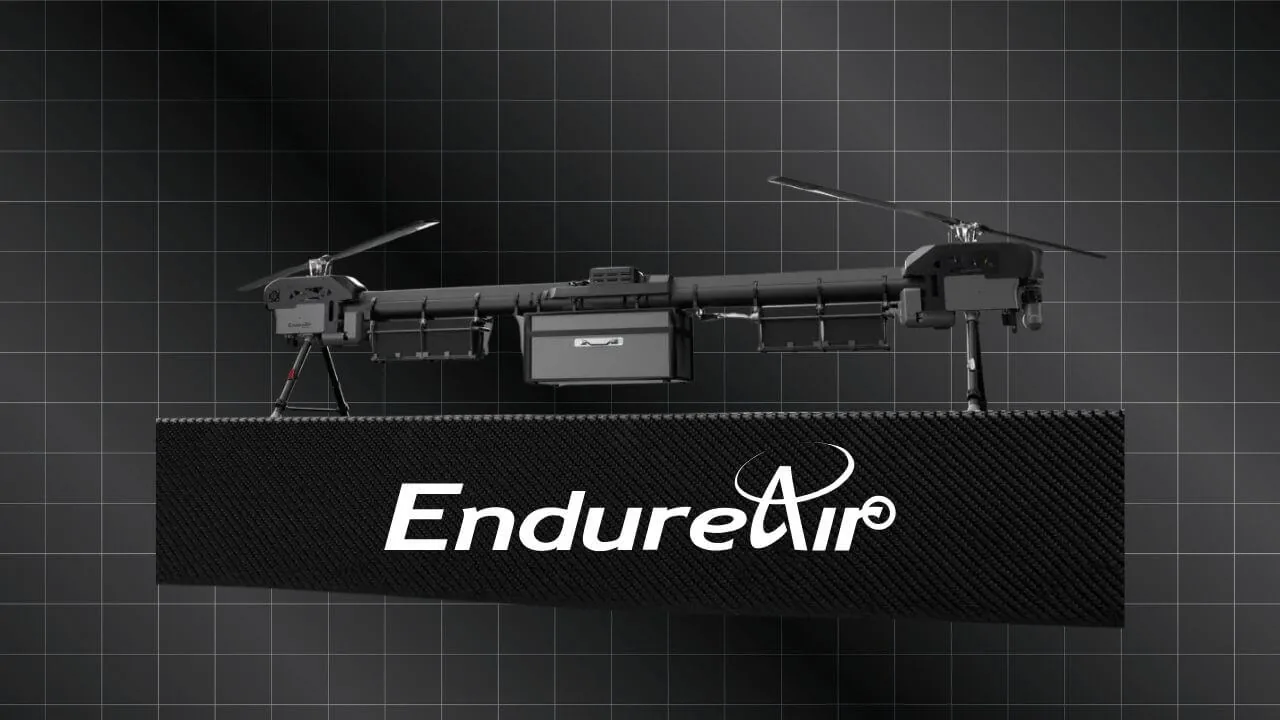
Noida-based EndureAir Systems has developed SABAL 20, an electric unmanned aerial vehicle (UAV) designed to carry up to 20 kg of supplies and equipment to remote areas. The startup is incubated at IIT Kanpur.
UAV uses a variable-pitch tandem-rotor design and is intended for logistics missions in areas where road access or conventional landing infrastructure is limited. Its configuration allows the aircraft to take off and land vertically.
SABAL 20 has a maximum take-off weight of 60 kg and a stated maximum payload capacity of 20 kg, according to specifications provided by the company. The aircraft has a flight endurance of up to 40 minutes and an operational range of up to 10 km.
Drone Targets Remote Logistics
UAV has a maximum stated speed of 50 kmph and is designed to operate in wind gusts of up to 45 kmph. EndureAir has specified an operating temperature range of -25°C to +55°C.
Aircraft can operate at altitudes of up to 5,500 metres above mean sea level or 500 metres above ground level. These specifications are aimed at missions in mountainous and other difficult terrain where transporting supplies by road can take longer or may not be possible.
Electric UAV is primarily designed for aerial logistics. Its vertical take-off and landing capability means it does not require a conventional runway or prepared landing strip for operations.
UAV Supports Supply Missions
Company has identified forward-area resupply as one of the applications for SABAL 20. Such missions involve moving essential supplies and equipment to personnel located in areas that are difficult to reach by road.
Aircraft can also be used for transporting medical supplies and equipment during emergency response operations, particularly where road connectivity is poor. Its autonomous flight capability is intended to reduce the need for continuous manual control during logistics missions.
EndureAir has previously carried out demonstrations involving the use of its UAVs in mountainous areas. In 2023, the company conducted a proof-of-concept flight in Bhutan in which a drone carried a 10 kg bag of rice to a Himalayan monastery and returned in less than 10 minutes.
EndureAir Tests High Altitude
Startup also delivered SABAL 20 logistics UAVs in 2024 for Indian Army forward-area resupply operations in eastern Ladakh, according to the information provided by the company. The deployment was aimed at testing the use of unmanned aircraft for moving supplies in difficult terrain.
Earlier Bhutan demonstration involved a smaller payload than the 20 kg maximum capacity stated for SABAL 20. The company has since positioned the aircraft for logistics requirements where conventional transportation is constrained by terrain and infrastructure.
Tandem-rotor layout used by SABAL 20 has two sets of rotors positioned along the length of the aircraft. EndureAir has designed the system with variable-pitch rotors, which allow rotor blade pitch to be adjusted during flight.
About Chinook Helicopters
Boeing CH-47 Chinook is a heavy-lift military helicopter known for its tandem-rotor configuration, with one rotor positioned at the front and another at the rear. This arrangement allows the helicopter to carry heavy loads while maintaining lift across the aircraft.
Chinook helicopters are used for transporting personnel, equipment and supplies and for operations in areas where large transport aircraft cannot operate. The SABAL 20 design takes inspiration from this tandem-rotor arrangement but is an electric unmanned aircraft built for a much smaller payload class.
SABAL 20 UAV Use
Development of SABAL 20 places EndureAir in the growing field of unmanned logistics systems being developed for difficult terrain. Its stated specifications focus on payload capacity, vertical take-off and landing, endurance and operation at higher altitudes.
Aircraft is intended primarily for moving supplies rather than passenger transport. Its potential applications include forward-area logistics, medical deliveries and emergency supply missions where access by road is limited.
For EndureAir, the focus remains on using unmanned aircraft for logistics in locations where conventional transport faces terrain or infrastructure constraints. The company’s previous field demonstrations and reported deployment in eastern Ladakh provide operational examples for the use of its UAV systems in such conditions.