Delhi government has proposed a Rs 104-crore pilot project to tackle air pollution at 40 locations across the capital, with separate contracts planned for each site. The structure allows private companies and eligible startups to bid for individual assignments instead of competing for the entire project.
Pollution Control Committee of Delhi will select the lowest eligible bidder for each contract under the procurement plan. The proposed work aims to reduce PM10 and PM2.5 levels by 20% at the selected locations during the one-year contract period.
Each of the 40 schedules carries an estimated value of Rs 2.6 crore. The procurement document, however, states that this figure is meant to determine eligibility conditions and earnest money requirements and will not act as the basis for deciding the final quoted price.
40 Contracts Cover Sites
Project has been classified under “Air Quality Monitoring Service, Outdoor Area”. The technical specifications cover aspects such as sampling locations, frequency of sampling, number of samples, pollutants and other parameters to be monitored, along with reporting requirements.
Selected locations fall across different types of public and high-footfall areas. These include marketplaces, commercial districts, transport hubs, tourist destinations, hospitals and educational institutions.
Instead of awarding the complete programme to a single agency, the government has divided the procurement into 40 schedules. Agencies can therefore choose individual schedules for which they meet the specified requirements and submit bids.
Startups Get Relaxation
Procurement conditions also provide an opportunity for eligible startups to participate. Startups recognised by the Department for Promotion of Industry and Internal Trade can seek relaxation from specified turnover and prior-experience requirements.
Relaxation is subject to the conditions mentioned in the procurement document. It could allow newer firms with relevant air-quality monitoring, environmental technology or related capabilities to compete for individual contracts.
Bidding process also includes financial safeguards. A bidder has to deposit Rs 5 lakh as earnest money for every schedule selected for bidding.
Bidders Financial Rules
Agency awarded a contract will also have to submit a performance bank guarantee equivalent to 3% of the contract value. The guarantee will remain valid for 14 months.
Payments will be made within 45 days after the service delivery acceptance certificate is issued and the required bills are submitted online. The arrangements are intended to link payment to completion and acceptance of the contracted work.
Exact locations and implementation details will be governed by the technical specifications accompanying the procurement document. The proposed contracts are for one year.
Air Pollution in Delhi
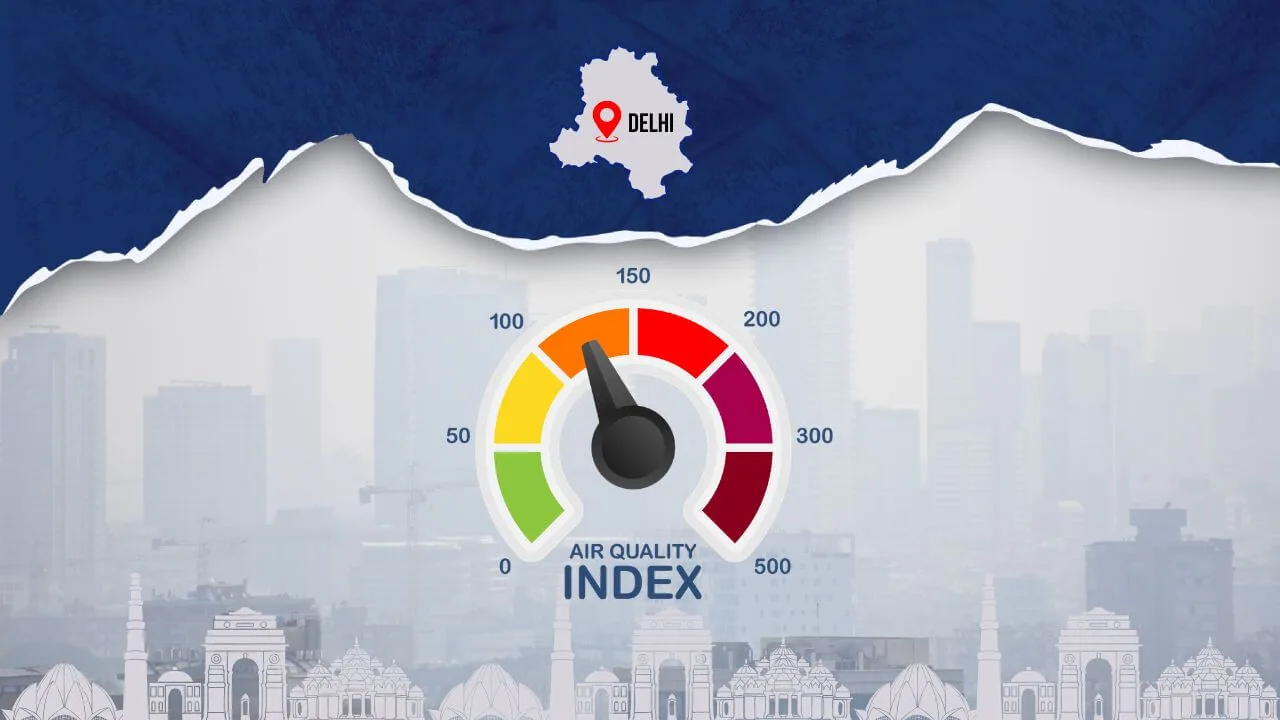
Delhi regularly faces a sharp deterioration in air quality during the winter months, particularly from November through February. The problem is linked to a combination of local emissions, road and construction dust, weather conditions, low wind speeds and seasonal pollution from neighbouring states.
During this period, particulate matter levels can rise sharply and Delhi frequently records days in the poor, very poor or severe air-quality categories. Winter weather can also trap pollutants close to the ground, making dispersion difficult.
Annual deterioration has made PM2.5 and PM10 reduction a recurring policy challenge for Delhi. Monitoring pollution at specific locations is therefore one part of the wider measures used to identify and address local sources of particulate pollution.
Project Targets Pollution Levels
Proposed procurement is focused on outdoor air-quality monitoring and has a stated target of achieving a 20% reduction in PM10 and PM2.5 levels at the selected sites. The documents do not indicate that the entire citywide pollution problem will be addressed through these 40 contracts.
Dividing the project into separate schedules could also broaden participation in the tender process. Companies with suitable technology or monitoring capabilities can compete for specific locations rather than having to take responsibility for a citywide programme.
Next stage will depend on the bidding process and selection of eligible agencies by DPCC. The eventual results will determine which companies receive the 40 contracts and how the proposed monitoring and pollution-reduction measures are implemented across the selected locations.