

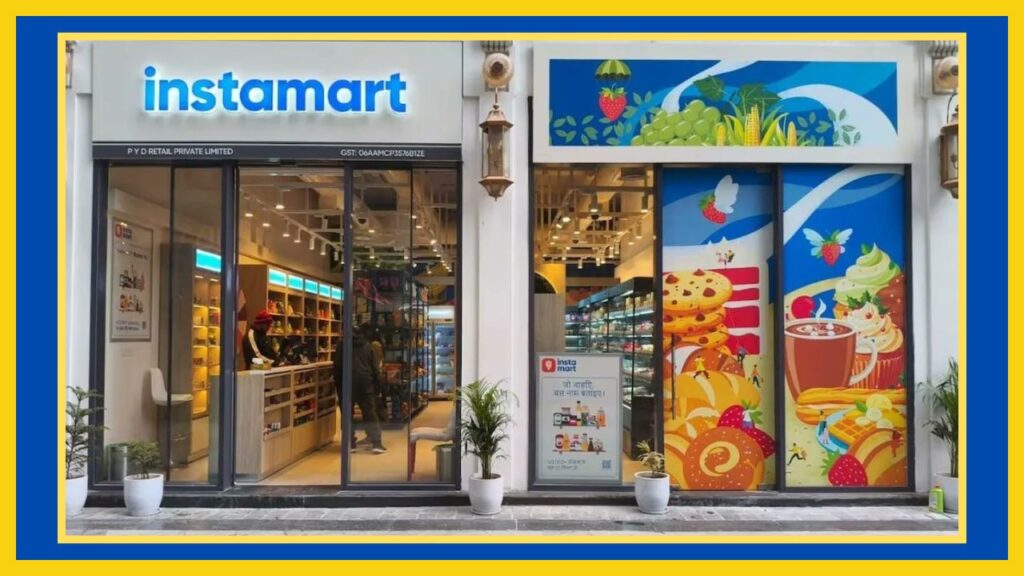
Swiggy Instamart, a quick commerce platform has piloted a physical experiential store in Gurugram, marking a limited move into offline retail as the company explores new ways to engage consumers. The initiative signals an experiment with hybrid commerce, combining online delivery infrastructure with small-format physical spaces.
According to people familiar with the development, the store operates independently of Instamart’s dark store network, which powers its rapid delivery service. The pilot outlet is located at M3M 65th Avenue in Gurugram and functions as a walk-in space where customers can browse and purchase products directly at the store.
Unlike Instamart’s app-based ordering system, purchases at the experiential store are completed offline. Consumers can physically inspect products and make payments on the spot, without placing orders through the Instamart application.
Swiggy Instamart Store
The assortment at the Gurugram outlet is intentionally small, with around 100 to 200 stock keeping units available. This is significantly lower than the wide catalogue offered through Instamart’s dark stores, which stock thousands of items to support quick delivery across urban areas.
The store is not positioned as a conventional retail outlet. Instead, it is designed as an experiential space where select products can be showcased. Categories where physical inspection is important, such as fresh fruits and vegetables, pulses, and newly launched products, are given priority.
Sources indicated that the format is being tested primarily by sellers who already operate on the Instamart platform. These sellers are experimenting with physical stores, especially in and around residential societies, to better understand consumer behaviour in an offline setting.
Seller-Led Experiment
The transaction structure at the store also differs from Instamart’s usual operating model. Payments made by customers are routed directly to sellers, rather than being collected by Swiggy and settled later. This points to a more seller-driven approach, with Instamart providing branding and operational support.
The experiential outlet is running alongside Instamart’s core dark store infrastructure, which remains central to the company’s quick commerce strategy. There is no indication that the offline format will replace or significantly alter the existing delivery-led model.
Swiggy has not made any official announcement regarding the pilot or shared details on whether the format will be expanded to other locations. For now, the Gurugram store appears to be an early-stage test aimed at gathering insights rather than a confirmed shift in strategy.
The move comes at a time when quick commerce players in India are exploring ways to differentiate themselves amid intense competition. As platforms focus on speed, assortment, and customer experience, small offline experiments such as this may help companies evaluate the role of physical touchpoints in an otherwise digital-first ecosystem.
While the long-term plans remain unclear, the pilot suggests that hybrid commerce models are being closely studied, especially in categories where trust, freshness, and product experience play a key role in purchase decisions.